




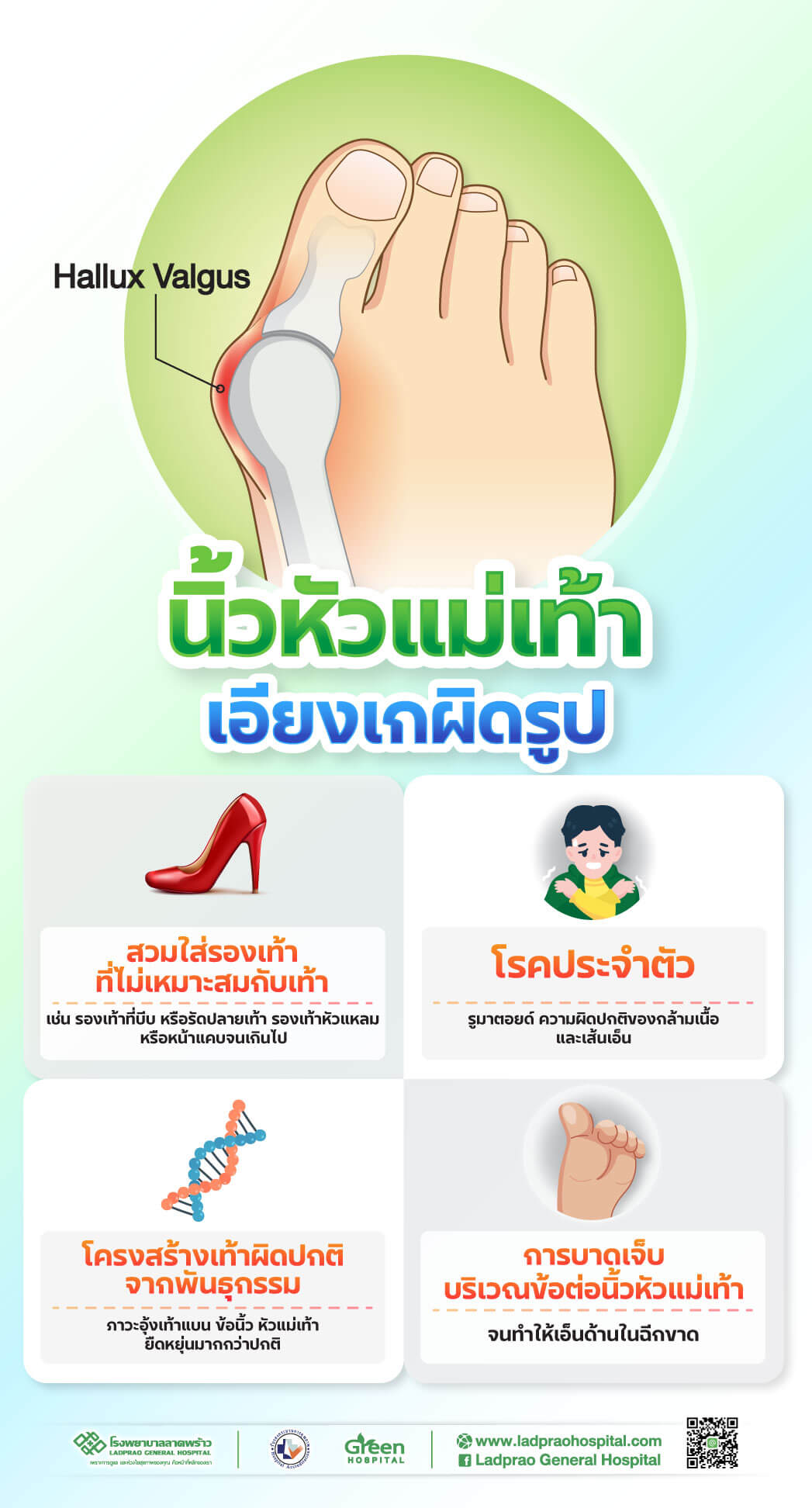
» Bunion and Hallux Valgus
- This is a common problem, especially among women and the elderly. The condition is caused by an abnormality in the foot's structure, which causes the big toe to gradually angle toward the second toe. This results in a bony bump on the inside of the joint at the base of the big toe, which can cause pain and difficulty walking.
Symptoms of hallux valgus.
- A prominent bump at the base of the big toe: A visible bony protrusion on the inside of the big toe joint.
- The big toe leans towards the second toe: It's clear that the big toe is leaning towards the second toe, sometimes even overlapping it.
- Swelling, redness, and pain: The bony prominence may become inflamed, swollen, red, and painful, especially when wearing tight shoes or walking for extended periods.
- Hardened and thickened skin: The skin around the base of the big toe may become thick and hard due to friction from shoes.
» Main cause.
- Genetics: Some people may be born with abnormal foot structures, such as flat feet or more flexible joints, which makes them more prone to developing this condition.
- Wearing improper footwear: Wearing narrow-toed shoes, high heels, or shoes that constrict the front of the foot for extended periods is a major factor that can worsen the condition.
- Underlying medical conditions: Various types of arthritis, such as rheumatoid arthritis, can also lead to bunions.
- Injury: An injury to the big toe joint can also lead to this condition.
» Treatment and prevention.
- Switching your shoes is the most important first step. You should choose shoes with a wide front and plenty of room for your toes. Avoid tight-fitting shoes and high heels.
- Toe-separating gel or a toe splint can help support and reduce friction.
- Physical therapy: Exercising to strengthen your foot muscles and using other physical therapy techniques can help relieve symptoms.
- Medication: Your doctor may recommend pain relievers or anti-inflammatory drugs to ease the pain.
- Surgery: If symptoms are severe or conservative treatments aren't effective, a doctor may consider surgery to realign the bones. This can permanently correct the deformity and reduce pain.
For further inquiries, please contact the Orthopedic Center, 4th Floor, Building 3, at 0 2530 2556 ext. 3400 or 3401