




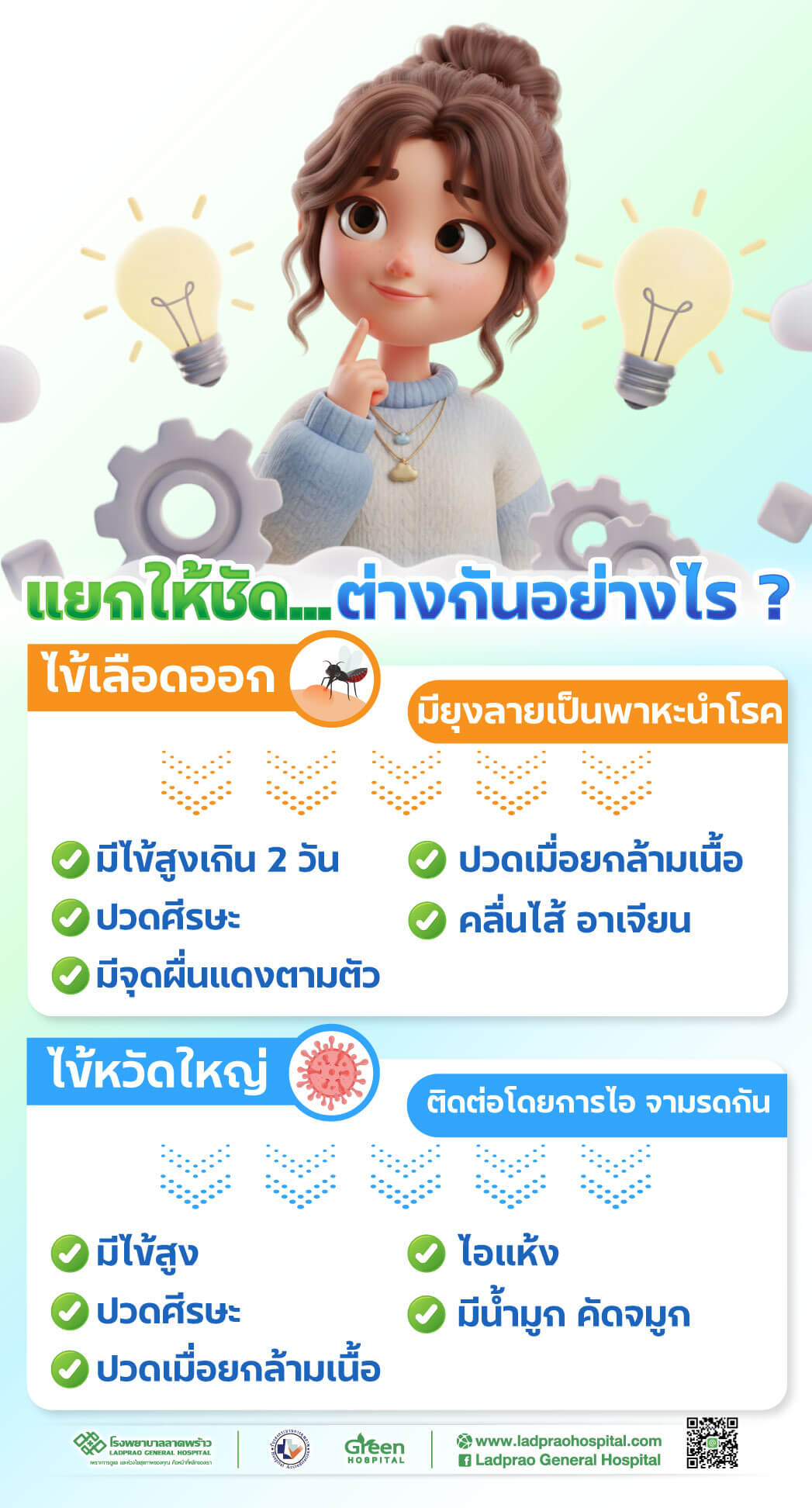
» Dengue Fever and Influenza
- A number of diseases caused by viruses have similar early symptoms, which can lead to confusion. However, the diseases differ in many ways, including their causes, symptoms, and treatments.
» Difference between dengue fever and influenza.
| Different characteristics. | Dengue Fever. | Influenza. |
| The Cause. | – Caused by the Dengue virus, which has four serotypes, with the Aedes mosquito as its vector. | - Caused by the influenza virus, which has multiple strains. |
| Contact symptoms | –Transmitted through the bite of an infected Aedes mosquito. | - Transmitted through respiratory droplets, such as from coughing or sneezing, or by contact with an infected person's bodily fluids. |
| Prominent symptoms. | - Acute persistent high fever for 2-7 days, possibly reaching 40°C, and often without a runny nose or cough in the initial stages. | - Sudden high fever, headache, muscle aches, and often respiratory symptoms such as coughing, sore throat, nasal congestion, and runny nose. |
| Other symptoms. | - Headache, eye pain. - Severe body aches, similar to bone pain. - Loss of appetite, nausea, vomiting. - A person might have small red spots on their skin (petechiae), a bloody nose (epistaxis), or bleeding gums. - Painful, enlarged liver. |
- Chills. - Severe fatigue. - In children, these symptoms might be accompanied by stomach pain or diarrhea. |
| Duration of symptoms. | - The fever will remain high for 2-7 days. After the fever subsides, the patient may enter a critical stage where they could go into shock. | - General symptoms will improve within 2-3 days after receiving fever-reducing medication. |
| Treatment. | - There is no specific vaccine or direct treatment. Doctors will provide supportive care to manage the symptoms. - Precaution: Avoid using aspirin or non-steroidal anti-inflammatory drugs (NSAIDs) such as ibuprofen, as they can increase the risk of bleeding. |
- Doctors may consider prescribing antiviral medication (if indicated) or provide symptomatic treatment, such as fever reducers, cough medicine, or decongestants. |
| Protection. | - Protect yourself from mosquito bites by using a mosquito net or applying mosquito repellent. - Eliminate breeding grounds for Aedes mosquitoes, such as covering water containers tightly and frequently changing the water in vases. - Get the dengue fever vaccine (consult a doctor first). |
- Get the influenza vaccine annually. - Wash your hands frequently and thoroughly. - Avoid close contact with sick people. |
» Symptoms that require immediate medical attention.
- For both diseases, if you have any of the following symptoms, you should see a doctor immediately, as they may be signs of a severe condition.
» Dengue fever.
- Fever does not subside after 3-7 days.
- Severe abdominal pain.
- Frequent vomiting.
- Bleeding from the skin or other organs.
- Experiencing shock: cold hands and feet, low blood pressure, rapid breathing, and a pale face.
» Influenza (the flu).
- Chest pain or difficulty breathing.
- Severe dizziness.
- Muscle weakness.
- Dehydration symptoms.
For more information, please contact the Health Check-up Center, Building 3, 3rd Floor, Tel. 0 2530 2556 Ext. 3300, 3301.