




» Hand, Foot, and Mouth Disease
- It is a common illness in young children, especially those in daycare centers or kindergartens, as the virus spreads easily through contact. The best prevention is good hygiene.
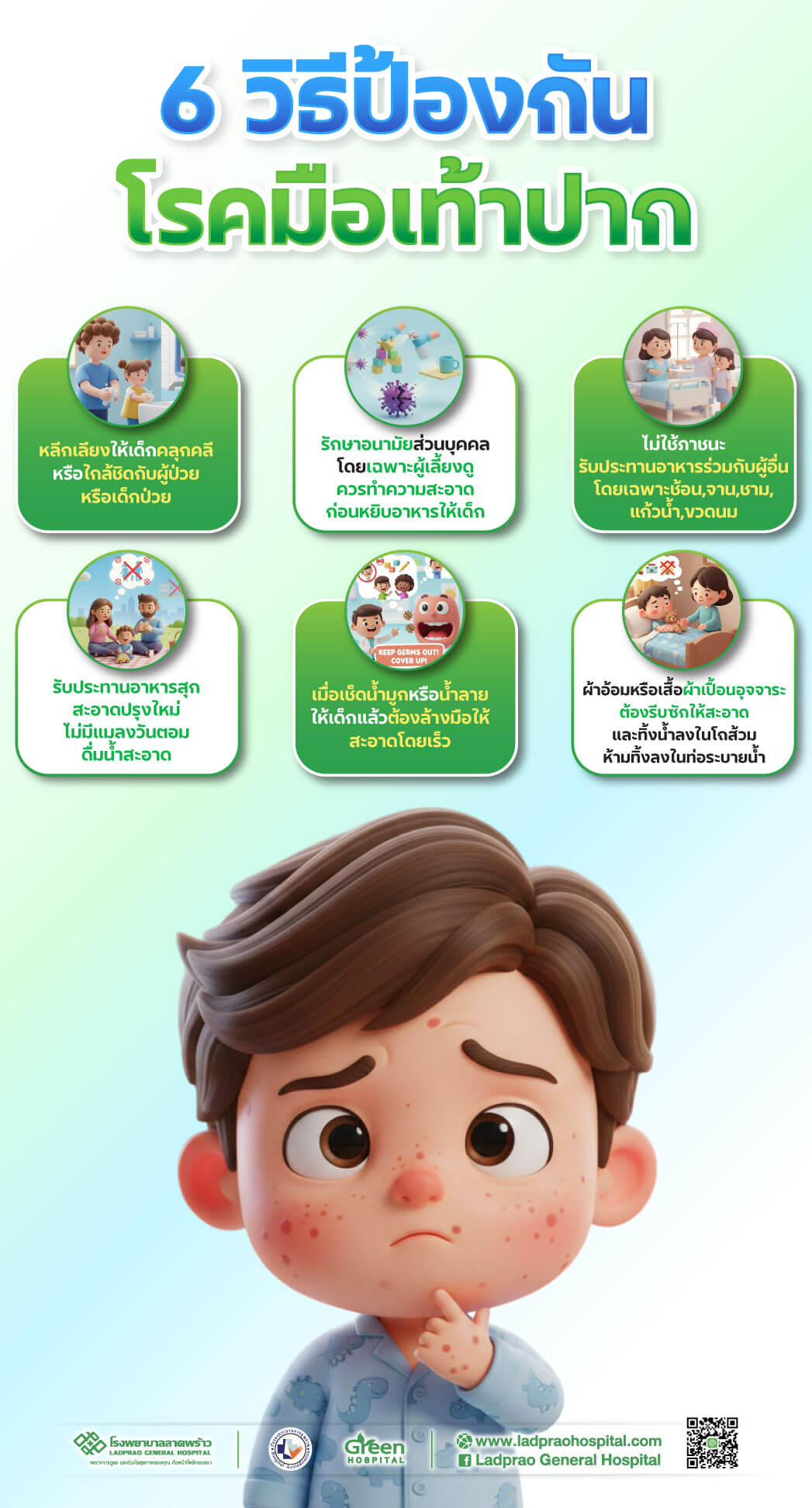
» 6 Ways to Prevent Hand, Foot, and Mouth Disease
- Washing your hands frequently and correctly is the most important way to prevent the spread of germs. Both adults and children should wash their hands with soap and clean water for at least 20 seconds, especially after using the restroom, changing diapers, before and after preparing food, and after being in contact with someone who is sick.
- Clean and disinfect frequently touched objects and surfaces: The viruses that cause hand, foot, and mouth disease can survive on surfaces for several days. You should regularly clean and disinfect toys, doorknobs, various surfaces, and shared utensils.
- Do not share personal items with others: Separate drinking and eating utensils, as well as towels and other personal items, from those of a sick person to prevent the spread of germs.
- Avoid taking children to crowded places: During a disease outbreak, you should avoid taking young children to crowded places such as shopping malls, playgrounds, or markets to reduce their chances of being exposed to germs.
- Teach children about good hygiene: Explain to children that they should not put their fingers, toys, or other objects in their mouths, and that they should cover their mouth and nose when they cough or sneeze.
- If a child is sick, they should stay home from school and rest: When a child shows symptoms of hand, foot, and mouth disease, they should stay home from school and rest to prevent the spread of the illness to other children. You should also take them to a doctor for proper treatment.
» Cause.
- It is caused by an infection with a group of enteroviruses, of which there are several strains. The most common strain is Coxsackievirus A16, which usually causes mild symptoms. Another strain to watch out for is Enterovirus 71 (EV71), which can cause severe symptoms and serious complications.
» Contact
- Direct contact: Touching the saliva, mucus, blister fluid, or stool of an infected person.
- Respiratory: Coughing or sneezing on one another.
- Contact with objects: Touching objects or surfaces contaminated with the virus, such as toys or utensils.
» Symptoms.
- Fever: Low-grade to high fever.
- Symptoms in the mouth: Sore throat, sore mouth, and blisters or small ulcers in the mouth (on the inner cheeks, palate, and tongue), which can cause a child to eat less and drool.
- Rash/Blisters: Red rash or small blisters on the palms of the hands and soles of the feet, and sometimes on the buttocks, around the genitals, and on the torso.
» Treatment.
- Currently, there is no specific medication to treat hand, foot, and mouth disease. Therefore, treatment focuses on managing the symptoms. These include:
- Reducing fever and relieving pain: Give fever-reducing medication, such as paracetamol.
- Relieving mouth sores: Use a topical anesthetic for the mouth sores to help the child eat.
- Preventing dehydration: Give the child plenty of water or electrolyte drinks. They should also eat soft foods that are easy to swallow, such as porridge, rice soup, or cold foods like ice cream and yogurt, to help reduce pain.
- Get enough rest: To allow the body to recover quickly.
» Protection.
- The best way to prevent hand, foot and mouth disease is:
- Wash your hands thoroughly: Wash your hands frequently with soap and water, both for children and adults, especially after using the restroom and before eating.
- Clean personal items and toys: Regularly clean toys and items that children touch with a disinfectant.
- Separate personal items: Keep the eating and drinking utensils of a sick child separate from others.
- Avoid taking children to crowded places: Avoid taking children to places with many people, such as playgrounds or shopping malls, during a disease outbreak.
- Rest at home: If a child is sick, they should stay home from school and rest to prevent the spread of the infection to other children.
For more information, please contact the Pediatric Center, Building 2, 2nd Floor, Tel. 0 2530 2556 ext. 2200, 2201.