




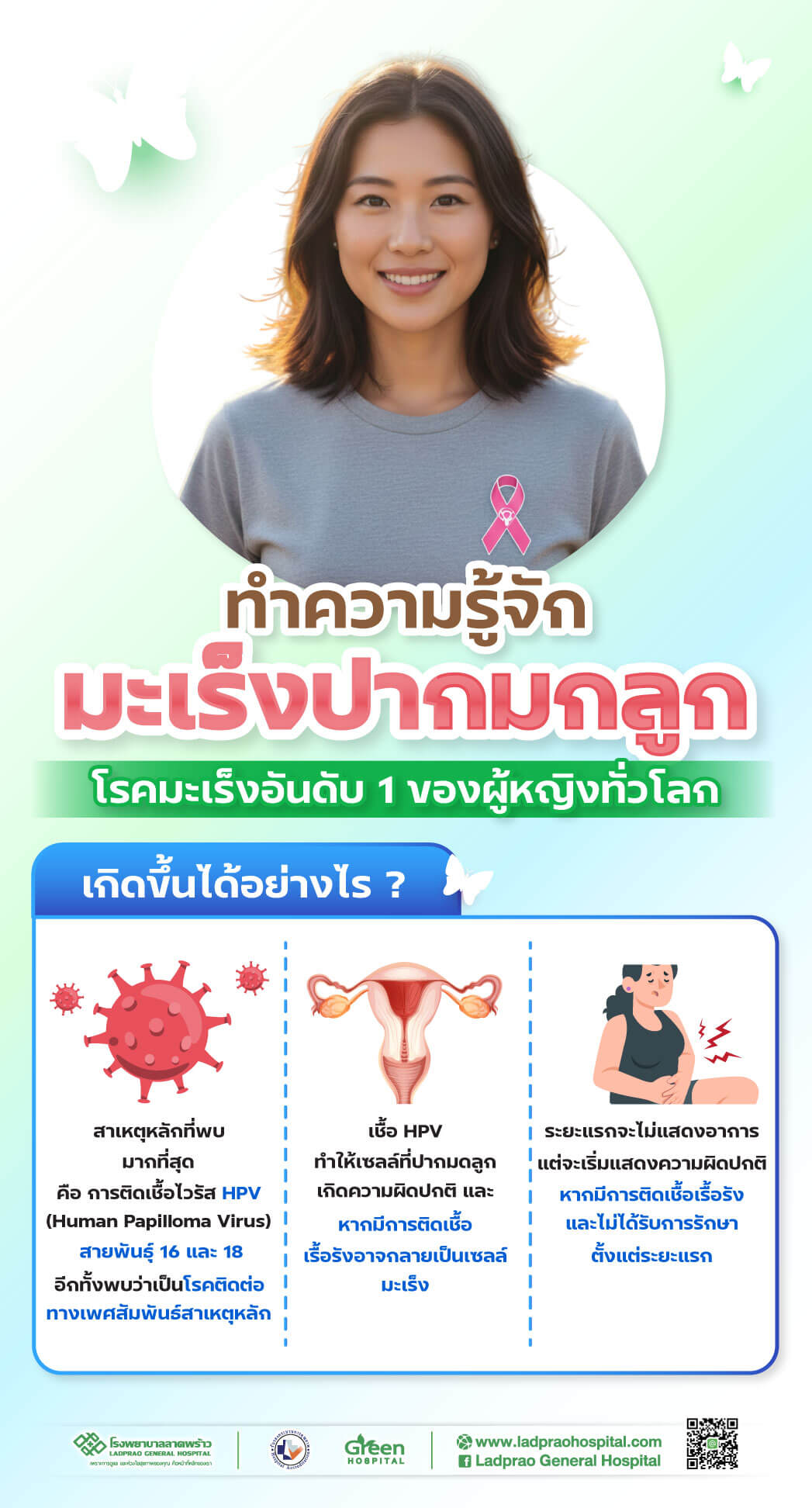
» Cervical cancer.
- It is a common cancer in women caused by abnormal growth of cells in the cervix, which is the narrow end of the uterus that connects to the vagina.
» Main cause.
- The main cause of cervical cancer is infection with the human papillomavirus (HPV), particularly high-risk strains, which are mostly transmitted through sexual contact. Other risk factors include:
- Having sex at an early age.
- Polyamory.
- Having multiple children.
- Immunocompromised, such as an HIV-positive person.
- Genetic predisposition: A family history of cervical cancer.
» Symptoms.
- In the early stages, cervical cancer often has no clear symptoms. However, as the cancer progresses, the following symptoms may appear:
- Abnormal vaginal bleeding.
- Sporadic bleeding between menstrual periods.
- Bleeding after sexual intercourse.
- Heavier or longer-than-usual menstrual periods.
- Bleeding after menopause.
- Abnormal vaginal discharge: unusually heavy discharge, foul-smelling, or mixed with blood.
- Other symptoms.
- Lower abdominal or lower back pain.
- Fatigue and unexplained weight loss.
- If the cancer spreads to nearby organs, symptoms may include blood in urine or stool, leg pain, swollen legs, or kidney failure.
- Abnormal vaginal bleeding.
» Treatment.
- The treatment approach primarily depends on the stage of the disease and the patient's overall health. The methods used are as follows:
- Surgery.
- Cervicectomy (Conization): For early-stage cancer, this involves removing only the cancerous part.
- Hysterectomy: For more advanced cancer.
- Radiation therapy: uses high-energy radiation to destroy cancer cells.
- Chemotherapy: uses drugs to destroy cancer cells.
- Surgery.
» Protection.
- Preventing cervical cancer is highly effective and can be done in several ways.
- HPV vaccination: The vaccine can prevent infection with high-risk HPV strains. It should be administered from the age of 9 and older.
- Regular cervical cancer screening: All women who have had sexual intercourse should have regular internal examinations and cervical cancer screenings (Pap smear or HPV DNA test) every 1-3 years, as recommended by a doctor.
- Avoid risk factors: such as early sexual activity, having multiple partners, and smoking.
For more details, please contact the Women's Health Center, Building 2, 3rd Floor, Tel. 0 2530 2556 ext. 2310, 2320.