




DESCRIPTION
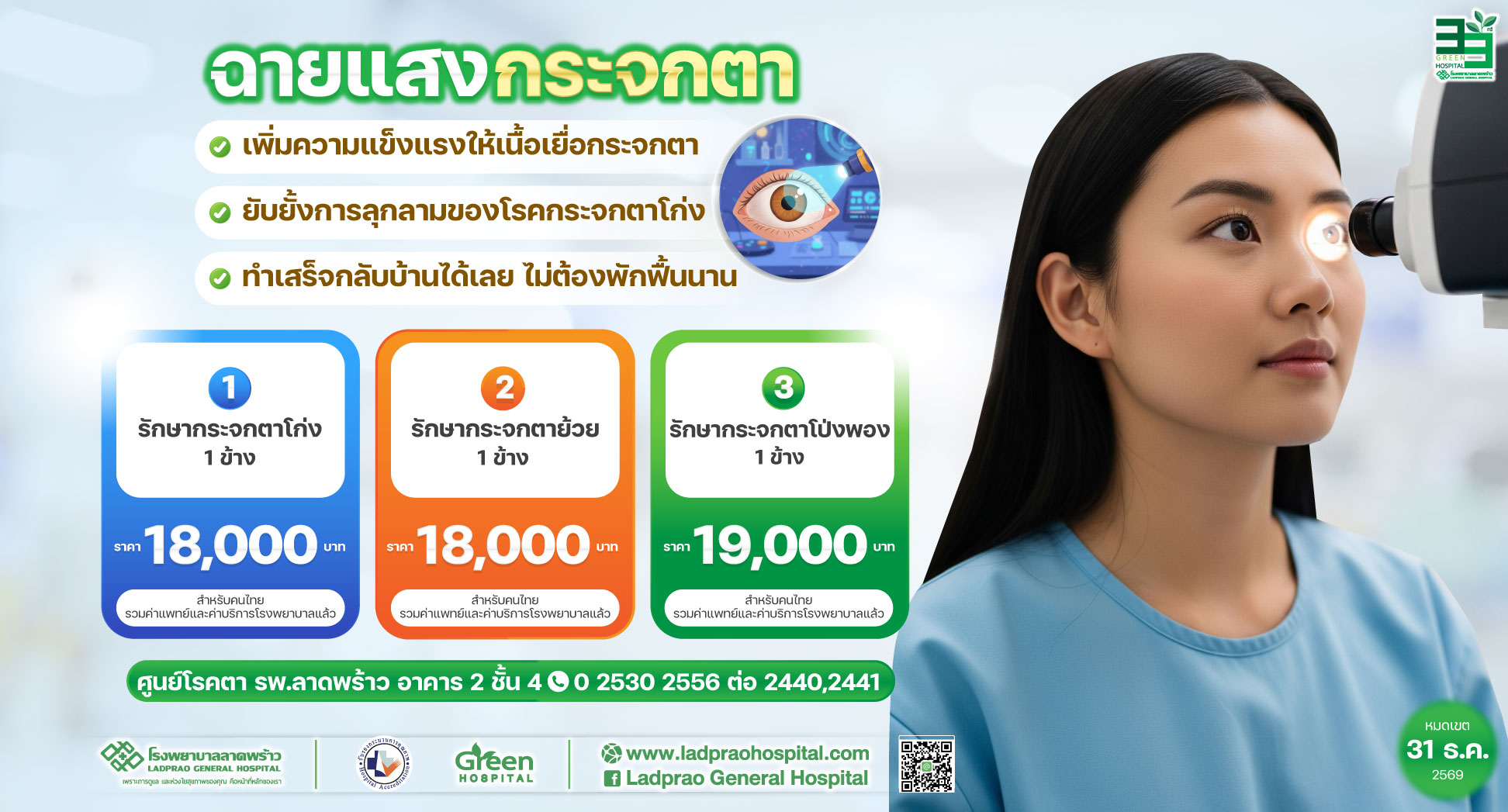
Corneal Light Treatment.
| Number. | Checklist. | จำนวน | Cost. |
| 1 | รักษากระจกตาโก่ง | 1 side | 18,000.- |
| 2 | รักษากระจกตาย้วย | 1 side | 18,000.- |
| 3 | รักษากระจกตาโป่งพอง | 1 side | 19,000.- |
» เงื่อนไขการเข้ารับบริการ
- Doctor's fees include the fees of the ophthalmologist who performs the surgery.
- ค่าบริการพยาบาล ได้แก่ ค่าบริการพยาบาลผู้ป่วยนอก และพยาบาลประจำห้องผ่าตัด
- Operating room cost
- ค่ายา ได้แก่ ค่ายาที่ใช้ในห้องผ่าตัดที่เกี่ยวข้องกับการผ่าตัดตามรายการที่กำหนด
- Medical equipment costs Medical supplies used in the operating room related to surgery according to the specified list
- Medicine expenses to take home as specified
- Cost of artificial lenses according to the type specified in the lump sum list
» THE PACKAGE LIST DOES NOT INCLUDE THE FOLLOWING ITEMS.
- ค่าปรึกษาแพทย์ก่อนวันเข้ารับการผ่าตัด
- โปรแกรมเหมาจ่ายนี้เป็นการผ่าตัดแบบผู้ป่วยนอก (OPD) ซึ่งไม่รวมค่าห้องพักในกรณีนอนพักรักษาตัวในโรงพยาบาล
- Treatment not related to disease was excluded. and in case of complications
- ในกรณีที่ใช้วิธีดมยาสลบ จะไม่สามารถใช้โปรแกรมเหมาจ่ายนี้ได้
» NOTE.
- ราคาแพ็กเกจสำหรับชาวไทยและชาวต่างชาติที่พำนักอาศัยพร้อมทั้งทำงานในประเทศไทย (Expatriate)
- ราคาแพ็กเกจนี้สำหรับผู้ที่ชำระด้วยเงินสดหรือบัตรเครดิตเท่านั้น ไม่สามารถใช้ร่วมกับการเรียกเก็บเงินผ่านบริษัทคู่สัญญา บริษัทประกัน บริษัทตัวแทน หรือใช้ร่วมกับส่วนลดและสิทธิพิเศษอื่นๆ ได้
- การพิจารณาใช้แพ็กเกจสลายต้อกระจกด้วยคลื่นความถี่สูง ขึ้นอยู่กับดุลยพินิจของแพทย์ผู้ทำการผ่าตัด
» Duration. : หมดเขต 31 ธันวาคม 2569
» สอบถามข้อมูลเพิ่มเติม : ศูนย์โรคตา ชั้น 4 อาคาร 2 โทร.0 2530 2556 ต่อ 2440,2441